

The 40-Year Delayed Impact: When FND Finally Catches Up with an 80mph Crash
Forty years ago, I walked away from a massive, 80mph motorcycle crash. For four decades, I did what a lot of us do: I ignored the warning signs. I pushed past the trapped spinal nerves, ignored the physical triggers, and just kept moving. I thought I’d left that crash in the rearview mirror.
But the nervous system doesn’t forget.
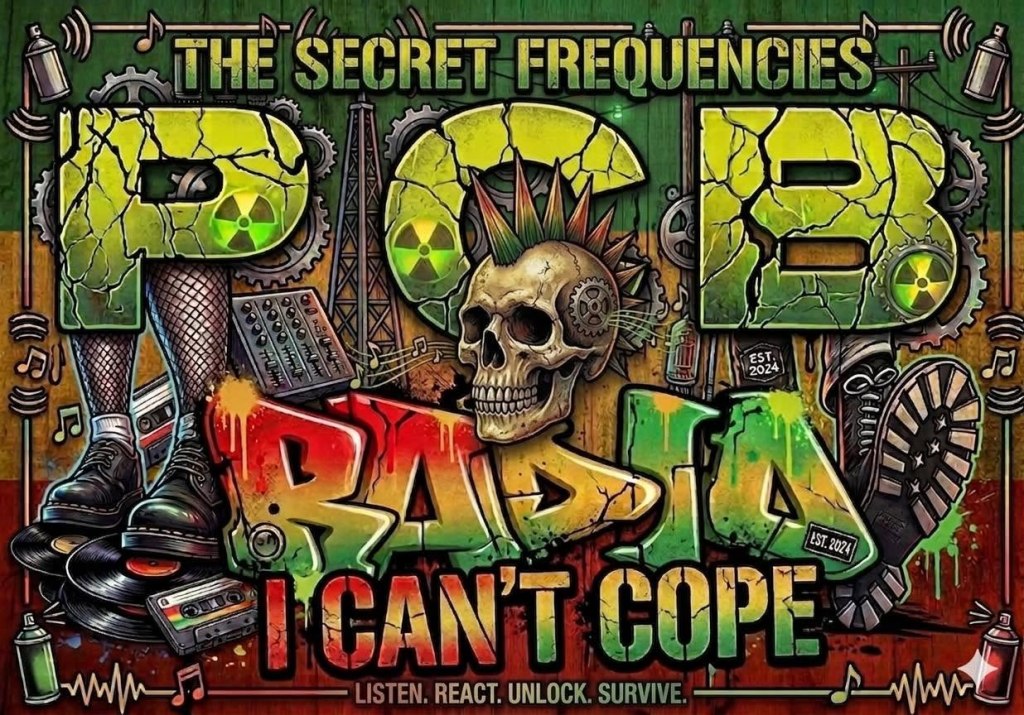
Recently, the wall I built to hold back that trauma finally gave way. It didn’t just leak; it burst open into a full-blown storm of 26 different symptoms, all tied back to Functional Neurological Disorder (FND). As the banner artwork for my radio project vividly shouts: “I CAN’T COPE.” Suddenly, what was once a hidden physical injury became an overwhelming, full-body mental and neurological battle.
When the “Software” Explodes After 40 Years
For half a lifetime, my brain managed to suppress the faulty signaling caused by those trapped spinal nerves. But FND is a software glitch. When the brain gets completely exhausted from decades of over-compensating, masking stress, and fighting through the pain, it loses its ability to filter out the noise.
The result looks a lot like the graphic in —a chaotic, high-voltage domino effect of 26 seemingly unrelated symptoms. From muscle spasms and internal buzzing to intense brain fog and sensory overload, the system goes into a total toxic overdrive. The brain is essentially misfiring on every single channel, trying to process 40 years of stored-up adrenaline, radio static, and trauma all at once.
Finding the “Off” Switch with Frequency
When you are dealing with 26 symptoms simultaneously, standard medical approaches can feel like playing whack-a-mole. You treat one, and three more pop up. That is why turning to external sound frequencies is so powerful—it doesn’t just target one symptom; it targets the entire nervous system.
Slowing the Racing Engine: For 40 years, my nervous system has been running at 100mph just to keep the pain at bay. Low, grounding frequencies (like 2.5 Hz Delta tones) act like a brake pedal, forcing a hyper-vigilant brain to finally slow its baseline frequency down.
Clearing the Static: FND creates an immense amount of internal “noise.” Listening to steady, harmonious frequencies (like 174 Hz or 432 Hz) through headphones gives the brain a massive, clean sensory anchor. It distracts the central nervous system, effectively turning down the volume on those 26 misfiring FND signals.
Easing the Spinal Grip: When the mind is in a state of FND-induced panic, the muscles around the spine lock up tight, squeezing those old, trapped nerves even harder. Deep, ambient audio tones trigger the vagus nerve, signaling the body that it is safe to finally drop its guard and let those muscles relax.
Listen. React. Survive.
Ignoring the triggers worked for a long time, but the engine has finally backfired. Managing FND with 26 symptoms means accepting that the old way of “just pushing through” is over.
Using sound therapy isn’t about magic cures. It’s about using pure physics to calm a 40-year-old storm. By plugging in, tuning out the chaos, and letting a steady frequency take over, I’m finally teaching my nervous system how to do something it hasn’t done since before that crash: safely slow down, cut through the static, and rest.
The tag at the bottom of your image—”LISTEN. REACT. SURVIVE.”—is the absolute perfect mantra for this entire journey. It fits the FND and frequency connection so well


You must be logged in to post a comment.