
When “Normal” Results Feel Like a Defeat
There is a specific kind of exhaustion that comes with chronic illness, and it happens right after you walk out of an imaging clinic.
You spend weeks waiting for an appointment, you sit inside a loud MRI machine or lie under an X-ray, and you secretly hope that this time, the images will show something. You don’t want to be ill, but you desperately want the proof. You want a picture you can point to so you can say, “Look, there it is. That’s why I’m struggling.”
And then the results come back. “Good news, the scans are completely clear. Everything looks normal.”
It doesn’t feel like good news. It feels like a total defeat.
How can a scan be completely “normal” when you are living with a body that is fighting through all of this every single day?
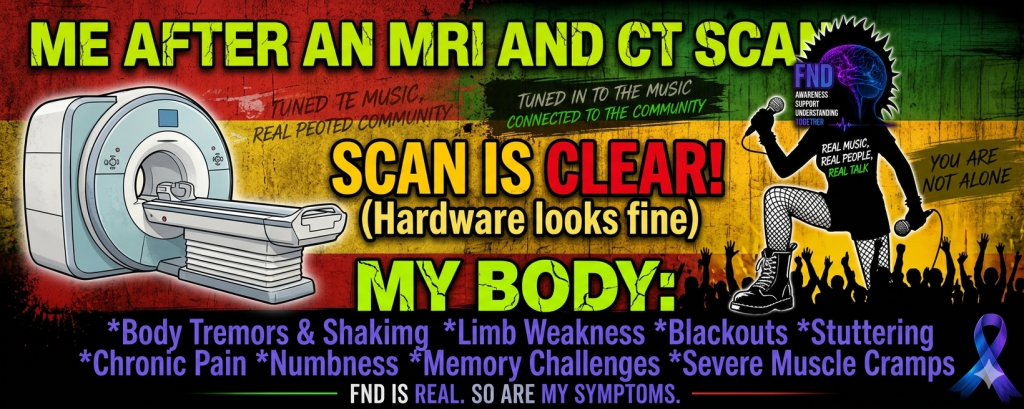
Motor & Movement Issues: Body tremors, violent shaking, limb weakness, drop foot, gait issues, and severe muscle cramps and spasms.
Speech & Cognitive Struggles: Stuttering, confusion, and memory challenges.
Sensory Disruption: A constant cold spine sensation, numbness, and altered taste or smell.
Systemic Exhaustion: Blackouts, persistent chronic pain, feeling constantly cold, and a level of fatigue that drains you completely.
When you are battling that massive list of physical issues and the medical staff tell you the scans are empty, it leaves you in a very dark, disheartening place. It feels like they are writing you off. It feels like they are looking at a clean piece of paper, looking at you, and deciding that because they can’t see the problem on an image, the problem must not exist.
Hardware vs. Software
What the doctors fail to explain is that these scans are only looking at the hardware of your body—the physical bones, organs, and tissues. If the hardware is intact, the scan comes back clear. But my issues aren’t hardware. They are software issues.
The physical “wires” are there, but the operating system is glitching. The signals being sent from my brain to my body are getting corrupted, delayed, or completely scrambled. A standard MRI simply cannot see a software glitch.
Because medicine is so obsessed with looking for hardware damage, getting a proper answer for a software illness takes an absolute eternity. You are passed from pillar to post, left waiting months on end for specialist appointments, stuck in a brutal limbo wondering if you will ever be fully diagnosed.
You leave the hospital feeling completely invisible, left to manage a body that isn’t cooperating while the system drags its feet.
Having “nothing” show up on a scan doesn’t mean the battle isn’t real. It just means the tools they are using can’t see the reality of what you are living through every single day. To anyone else out there dealing with the frustration of blank scans, endless waiting lists, and zero answers—I see you. It is disheartening as hell, but we keep pushing forward anyway.
Swifty
 Pcbradio.com
You must be logged in to post a comment.