

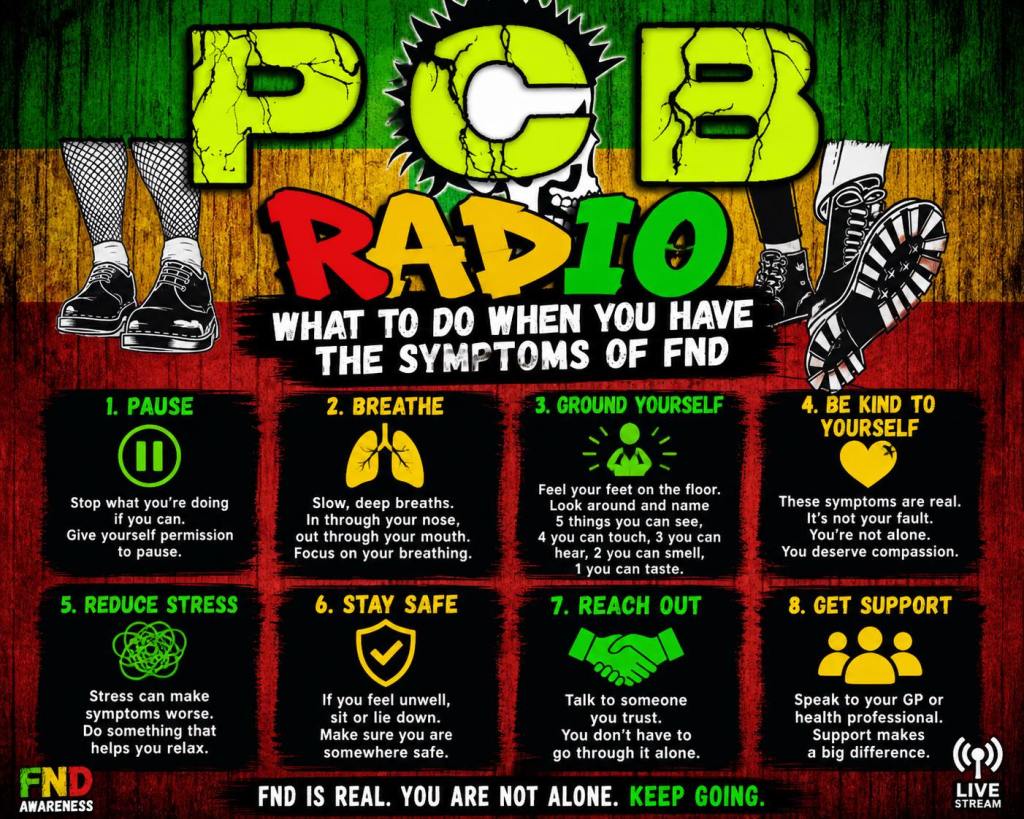
A Practical Guide From
PCB Radio
Living with Functional Neurological Disorder can be frightening, frustrating, and exhausting — especially when symptoms appear suddenly or become severe without warning.
Many people feel lost after diagnosis. They are often told what the condition is, but not always how to manage daily life with it.
While every person’s experience is different, there are practical things that may help reduce stress, improve safety, and make difficult days easier to manage.
First Thing To Remember
FND symptoms are real.
You are not “making it up.”
You are not weak.
You are not lazy.
Symptoms may fluctuate from day to day, but that does not make them any less real.
Learn Your Triggers
Many people notice patterns over time.
Common triggers can include:
- Stress
- Anxiety
- Lack of sleep
- Physical exhaustion
- Emotional overload
- Illness or infection
- Pain flare-ups
- Busy environments
- Sensory overload
- Overdoing activity on “good days”
Keeping a simple symptom diary can help identify what makes symptoms worse or better.
Pace Yourself
One of the biggest mistakes many people make is trying to do too much when symptoms briefly improve.
This can often lead to:
- crashes
- exhaustion
- worsening symptoms
- increased pain
- more falls or tremors
Try to:
- break tasks into smaller parts
- rest before exhaustion hits
- avoid pushing through severe fatigue
- spread activities across the day
Pacing is not giving up — it is managing energy more safely.
Make Your Environment Safer
If you experience:
- falls
- weakness
- blackouts
- tremors
- balance issues
then safety becomes important.
Things that may help:
- removing trip hazards
- keeping walkways clear
- using handrails
- sitting while dressing
- shower chairs if needed
- avoiding rushing
- keeping phones nearby
- asking for help when symptoms are severe
There is no shame in adapting your environment.
Don’t Ignore Mental Exhaustion
FND affects both body and mind.
Brain fog, emotional overload, and stress can dramatically worsen symptoms.
Things that may help:
- quiet environments
- reducing overstimulation
- taking breaks
- listening to music
- mindfulness or breathing exercises
- avoiding toxic stress where possible
- talking openly with supportive people
Mental overload can be just as exhausting as physical activity.
Understand Good Days & Bad Days
FND is often inconsistent.
One day you may function fairly normally.
The next day you may struggle to walk or think clearly.
This unpredictability can be emotionally draining.
Try not to:
- compare yourself to others
- feel guilty for resting
- force yourself beyond your limits
- judge your condition only by “good days”
Managing FND is often about balance, not perfection.
Seek Support
Living with invisible illness can feel isolating.
Support may come from:
- family
- friends
- support groups
- counselling
- online communities
- understanding partners
- disability organisations
Being believed and understood can make a huge difference mentally and emotionally.
Keep Medical Records & Notes
Because symptoms can fluctuate, it helps to keep:
- symptom diaries
- videos of tremors or episodes
- appointment notes
- medication lists
- fall records
- questions for specialists
This can help during appointments, benefit assessments, and medical reviews.
Be Kind To Yourself
Many people with Functional Neurological Disorder are extremely hard on themselves.
You may grieve:
- your old routine
- independence
- work
- mobility
- confidence
- relationships
- identity
That emotional impact is real too.
Learning to adapt takes time.
PCB Radio & FND Awareness
At PCB Radio we want to create a space where people living with neurological conditions feel understood instead of ignored.
Through shared experiences, honest discussion, music, humour, and community support — we hope to help people feel less alone in their journey.


You must be logged in to post a comment.